
Truck Insurance Canberra: Who Is Responsible When You Use Subcontractors, Leased Trucks or Hired Vehicles?
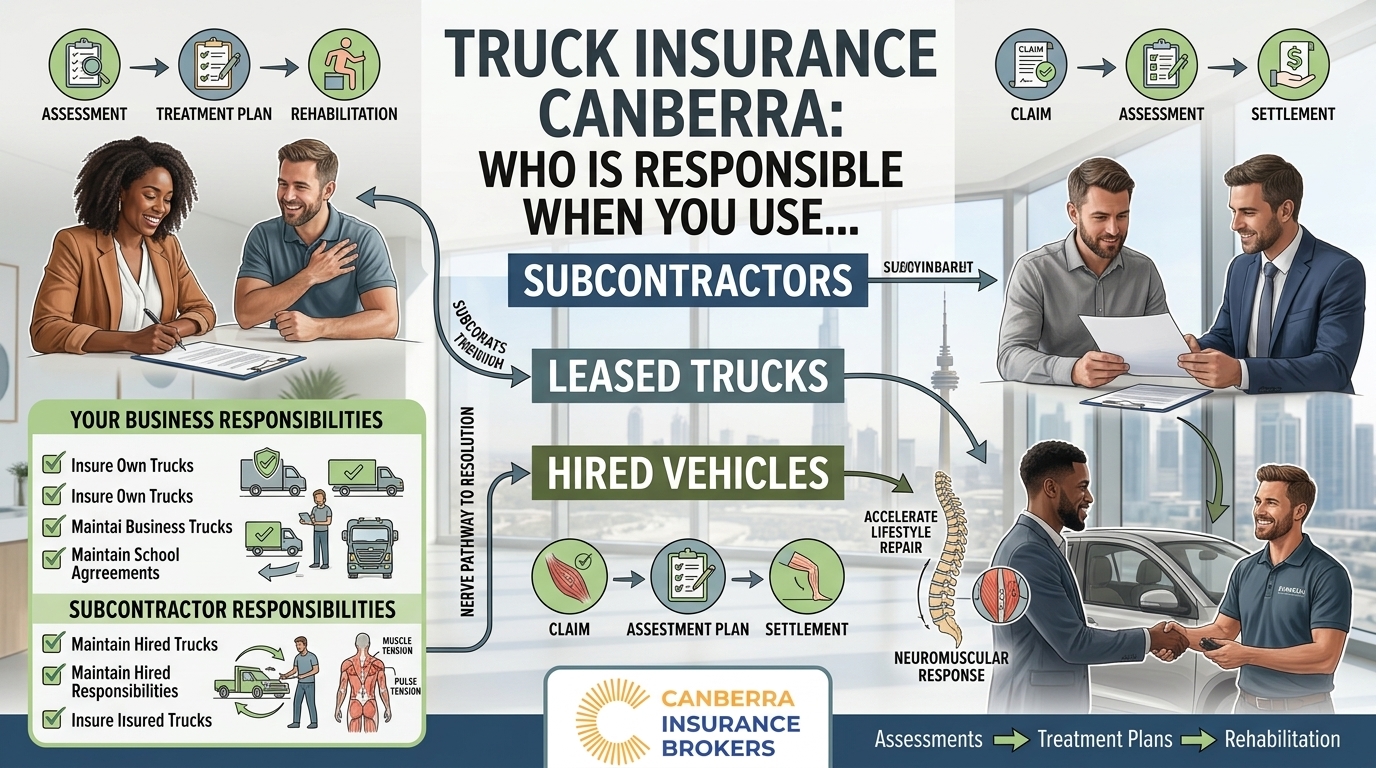
The Australian transport industry involves more than truck owners and drivers. Many deliveries are completed through a network of transport companies, owner-drivers, subcontractors, freight brokers and businesses hiring commercial vehicles to meet demand.
These arrangements can create confusion when it comes to insurance. A truck might belong to one business, be operated by another and transport goods on behalf of a third party. If an accident happens, several questions can arise: Who insured the vehicle? Who is responsible for damage to the cargo? Does the principal contractor's insurance protect the subcontractor? What happens when a hired truck is damaged?
For businesses operating in Canberra and across the ACT, understanding these arrangements is an important part of choosing suitable truck insurance.
The responsibility for arranging insurance depends on the ownership arrangement, hire or lease agreement, transport contract and individual policy wording. A contractor should never assume that another company's insurance automatically protects their truck, cargo or business liabilities.
This guide explains the insurance considerations for owner-drivers, subcontractors, transport companies and businesses using hired or leased trucks, including the documents worth checking before accepting a transport contract.
Why Transport Businesses Need to Understand Insurance Responsibilities
A transport job can involve several independent businesses. Each may have a different role, financial responsibility and insurance arrangement.
Consider a Canberra freight company that receives a delivery contract from a commercial supplier. The company does not have an available truck, so it engages an owner-driver to complete the delivery.
The owner-driver supplies the truck and driver, while the freight company manages the customer relationship and delivery schedule.
Although both businesses are involved in the same transport job, their insurance arrangements may be different.
The owner-driver may have commercial motor insurance for the truck. The freight company may hold its own business and liability policies. The customer may have insurance covering its goods.
However, none of these arrangements should automatically be assumed to cover every party involved.
The parties need to understand their contractual responsibilities, confirm which policies apply and identify any gaps before the journey begins.
The Australian Government's business.gov.au guide to preparing a contract recommends clearly documenting each party's responsibilities, insurance obligations, indemnities and subcontracting arrangements. <Cite refs={["turn240080search1"]}/>
1. Owner-Driver Truck Insurance in Canberra
An owner-driver operates a transport business using a truck they own or control. They may work directly for customers or accept jobs through larger transport companies.
Unlike an employee driver, an owner-driver generally has business responsibilities beyond driving the vehicle.
These may include maintaining the truck, arranging insurance, managing registration and operating expenses, maintaining records and meeting contractual obligations.
What Insurance Should an Owner-Driver Consider?
An owner-driver should review several areas of cover depending on the nature of the work.
Commercial motor insurance: This is the starting point for protecting the insured truck against specified events such as accidental damage, theft or fire, depending on the selected policy.
Third-party property damage: Check whether the motor policy covers damage to another person's vehicle or property arising from an insured vehicle incident.
Goods in transit or cargo insurance: If the owner-driver transports customers' goods, determine who bears responsibility for loss or damage and whether separate cargo protection is needed.
Public liability insurance: This may be relevant for claims involving third-party injury or property damage arising from transport-related business activities outside the risks addressed by the motor policy.
Trailer insurance: A trailer may need separate or specifically identified cover depending on its ownership and use.
Business interruption or income protection: Consider how the business would manage financially if the owner-driver could not work following an incident.
Not every owner-driver needs every type of insurance. The appropriate combination depends on the business and contractual obligations.
Why the Transport Contract Matters
An owner-driver may be asked to sign an agreement requiring specific insurance limits or additional insured arrangements.
Before accepting the job, check:
- Whether you are required to carry comprehensive truck insurance.
- Whether public liability insurance is required.
- Whether the agreement specifies cargo or goods in transit protection.
- Whether your insurance must cover particular transport activities.
- Whether subcontracting is permitted.
- Whether an indemnity clause creates additional financial responsibility.
Do not sign an agreement simply because the proposed freight rate looks attractive. Understand the responsibilities you are accepting and check that your insurance arrangements are suitable.
2. Truck Insurance for Transport Subcontractors
Subcontracting is common in the Australian transport industry. A larger freight company may engage smaller operators to complete regional deliveries, interstate freight movements or specialist transport jobs.
For example, a Canberra transport company might accept a delivery contract and then engage a subcontractor operating between Canberra and Sydney.
The principal company has a customer agreement, while the subcontractor performs the actual transport work.
This arrangement needs careful insurance consideration because the parties may have different responsibilities.
Does the Principal Contractor's Insurance Cover the Subcontractor?
Not automatically.
A principal contractor may have insurance designed for its own transport activities, but the policy may not extend to every subcontractor, vehicle or liability.
The subcontractor should confirm the position directly rather than relying on verbal assurances.
Before accepting a transport job, ask the principal contractor:
- Does its policy extend to subcontracted transport activities?
- Is the subcontractor specifically included or otherwise covered?
- Who is responsible for insuring the truck?
- Who is responsible for cargo or goods in transit?
- Which party handles claims involving customer property?
- Are specific liability limits required?
- Does the agreement contain indemnity obligations?
The answers should be checked against the actual insurance documents and contract terms.
What Should a Subcontractor Insure Independently?
A subcontractor should establish which risks it is responsible for and arrange suitable cover.
Depending on the operation, this can include commercial motor insurance, goods in transit insurance, public liability insurance and other relevant business protection.
The important point is that a contractor should not assume that working under another company's transport contract transfers all insurance responsibilities to that company.
A subcontractor's policy should also accurately describe the work being undertaken, including carrying goods for other businesses where relevant.
3. Who Insures a Hired Truck?
Transport businesses sometimes hire trucks because of seasonal demand, vehicle breakdowns, temporary contracts or unexpected increases in deliveries.
Hiring a truck can help a business continue operating without purchasing another vehicle. However, the insurance arrangements must be understood before the vehicle is used.
The first question is simple: Who is responsible for insuring the hired vehicle?
The answer depends on the hire agreement and insurance arrangements made by the vehicle owner and hirer.
Some hire arrangements include specified motor insurance or a damage waiver. Others may place additional responsibilities on the business hiring the vehicle.
What to Check Before Hiring a Truck
Review the following details before collecting the vehicle:
Insurance included in the hire agreement: Establish what motor cover is included and whether it applies to the intended commercial use.
Damage excess: Understand the amount payable if the hired truck is damaged or stolen.
Driver requirements: Check the approved driver conditions and any restrictions relating to age, experience or licence class.
Permitted use: Confirm that the vehicle can be used for the type of transport work you intend to perform.
Geographical restrictions: Check whether the hire agreement permits travel throughout the ACT, NSW and any other states included in your planned routes.
Cargo protection: Do not assume the hire vehicle's motor insurance covers the goods being transported.
Subcontracted work: Check whether the vehicle may be used for jobs accepted from another transport company.
Does Your Existing Truck Insurance Cover Hired Vehicles?
Some commercial motor policies may provide extensions or options for certain hired-in vehicles, but this is not universal.
A business that regularly hires commercial trucks should ask its broker whether its existing arrangements can accommodate temporary vehicles.
Provide details of the hire period, truck type, intended use and contractual responsibilities.
A business should also distinguish between hiring a replacement truck after an insured accident and hiring an additional truck to fulfil a transport contract. These situations may be treated differently under an insurance policy.
4. Leased Trucks: Understanding Insurance Requirements
Leasing is another common way for transport companies to obtain commercial vehicles.
A business may lease a truck for several years rather than purchasing it outright. Depending on the agreement, the leasing company may retain ownership while the operator uses the vehicle for business purposes.
This can create additional insurance requirements.
Who Arranges Insurance for a Leased Truck?
There is no universal answer. The lease agreement generally sets out which party must arrange insurance and what protection is required.
Some agreements may require the lessee to maintain comprehensive motor insurance throughout the lease.
The leasing company may also need to be recorded as an interested party or financier where required by the insurer and agreement.
Before signing, check:
- Who is responsible for arranging the policy?
- Which vehicle value must be insured?
- Is comprehensive insurance required?
- What happens if the truck is written off?
- How is the outstanding finance or lease balance handled?
- Are additional drivers or subcontractors permitted?
- Who pays the policy excess following damage?
Does Insurance Cover the Full Lease Balance?
Not necessarily.
The insured vehicle value and the outstanding amount owed under a finance or lease agreement may differ.
If the vehicle is declared a total loss, the claim settlement is determined by the policy's valuation basis and terms. The settlement may not be sufficient to discharge the full outstanding financial obligation.
Businesses should ask their broker or finance provider whether additional protection, such as an appropriate gap arrangement, is available and suitable.
Do not assume that every commercial truck policy includes this benefit.
5. Goods in Transit: Who Is Responsible for Customer Cargo?
One of the most frequently misunderstood areas of transport insurance is the difference between insuring the truck and insuring the goods it carries.
A commercial motor policy may cover specified damage to the vehicle, but that does not automatically mean cargo is protected.
Consider a subcontractor transporting commercial equipment from Canberra to a customer in regional NSW.
During the journey, an accident damages both the truck and the transported goods.
There are separate questions to address:
- Is the damage to the truck covered?
- Who owns the damaged cargo?
- Who was contractually responsible for the goods?
- Does the carrier have legal liability?
- Does the cargo owner's insurance respond?
- Is there separate goods in transit protection?
Carrier's Liability and Cargo Insurance
These terms should not be confused.
Goods in transit or cargo insurance may protect eligible goods against specified loss or damage.
Carrier's liability insurance generally concerns certain legal liabilities arising from the carrier's responsibility for goods, subject to the policy.
A subcontractor may have different obligations from the principal transport company. The contract should explain who is responsible for cargo protection and which party must arrange the relevant cover.
If you are transporting high-value machinery, commercial food products or other specialist cargo, tell the broker what you carry and how the goods are handled.
6. Public Liability Insurance for Truck Operators
Truck insurance does not necessarily address every risk created by a transport business.
A truck operator might also undertake loading, unloading, delivery-site activities, equipment handling or other services that create third-party liability exposures.
Public liability insurance may respond to certain claims involving third-party injury or property damage arising from business activities, subject to its terms and exclusions.
For example, a delivery contractor may damage customer property while unloading equipment at a commercial premises.
The incident may raise questions about the transport agreement, the work performed and the liability cover available.
A business should explain these activities when requesting insurance rather than describing itself only as a truck transport operator.
Public Liability and Indemnity Insurance
Public liability and professional indemnity insurance address different risks.
Public liability generally concerns certain physical injury and property damage claims involving third parties.
Professional indemnity is designed for certain claims alleging financial loss arising from professional advice or services.
Most ordinary freight operators will need to assess public liability exposure rather than automatically assuming they require professional indemnity. However, a business providing separate logistics consultancy, specialist technical advice or other professional services should discuss those activities with its broker.
Review the available public liability insurance in Canberra and business insurance options for further information.
7. Chain of Responsibility: Does Subcontracting Transfer Your Legal Duties?
Insurance responsibilities and heavy vehicle safety obligations are not the same thing.
Under Australia's Heavy Vehicle National Law, the Chain of Responsibility (CoR) recognises that multiple businesses can influence the safety of a transport activity.
A person or business may be a CoR party through functions such as employing a driver, engaging a self-employed driver under a contract for services, operating a heavy vehicle, scheduling transport or loading and unloading goods.
The National Heavy Vehicle Regulator explains that CoR responsibilities are based on the functions a party performs and its ability to influence or control transport activities, rather than simply the title used in a contract. <Cite refs={["turn305643search0","turn305643search4"]}/>
Can a Business Transfer Its Responsibility to a Subcontractor?
No. Contracting or subcontracting does not automatically remove a party's Primary Duty under the Heavy Vehicle National Law.
More than one business may have responsibilities for the same transport activity.
For example, a company arranging deliveries may influence schedules and contractual deadlines, while the transport operator manages the vehicle and the driver. The consignor may control how goods are packed and prepared for transport.
Each party must manage the safety risks it can influence or control.
The NHVR's shared responsibility guidance explains these obligations. <Cite refs={["turn240080search0","turn305643search1"]}/>
The NHVR also released its updated 2026 Master Code of Practice, which provides guidance on identifying and managing heavy vehicle transport risks. <Cite refs={["turn240080search5","turn305643search3"]}/>
Importantly, having suitable insurance does not replace Chain of Responsibility compliance, safe operating procedures or required vehicle maintenance.
8. Insurance Documents to Check Before Accepting a Transport Contract
Whether you are an owner-driver, principal contractor or subcontractor, reviewing the insurance documents before accepting a job can help prevent misunderstandings.
Use this checklist:
Document or detailWhat to verifyCommercial motor policyInsured vehicle, use, drivers and coverageCertificate of currencyPolicyholder, dates and stated coverPolicy scheduleLimits, excesses and insured assetsProduct Disclosure StatementExclusions, conditions and benefitsGoods in transit policyCargo, journey and handling arrangementsPublic liability policyBusiness activities and liability limitsHire agreementDamage responsibilities and excessLease agreementInsurance obligations and financier requirementsTransport contractIndemnity and insurance clausesSubcontractor agreementResponsibilities and insurance requirements
A certificate of currency is useful evidence that a policy is in place, but it should not be treated as a complete explanation of the policy's coverage. Ask for the relevant schedule and wording where necessary.
The Australian Government recommends that contracts clearly specify insurance obligations and that both parties check whether the cover matches the liabilities created by the agreement. <Cite refs={["turn240080search1","turn138792view2"]}/>
9. Questions to Ask a Canberra Insurance Broker
Before accepting a new transport contract, arranging a vehicle lease or hiring an additional truck, discuss the following questions:
- Does my existing motor policy cover the way I intend to use the truck?
- Is the vehicle insured in the correct business or legal entity's name?
- Are hired-in or leased vehicles included?
- Does my cover extend to authorised subcontracted activities?
- Do I need separate goods in transit insurance?
- Are trailers and customer property appropriately addressed?
- Are my public liability limits sufficient for the contract?
- Does the contract contain indemnity obligations that create additional exposure?
- Are there restrictions on drivers or interstate journeys?
- What should I do when purchasing, hiring or replacing a truck?
A business insurance broker in Canberra can help review the available options and identify questions that need to be clarified with insurers.
Canberra Insurance Brokers provides information about truck and transport insurance for commercial operators.
Frequently Asked Questions
Does a transport company automatically insure its subcontractor's truck?
No. The principal company's policy should not be assumed to insure every subcontractor's vehicle. Check the policy wording and agreement to establish who is responsible for arranging commercial motor insurance.
Does my truck insurance cover work completed for another transport company?
It depends on the policy and declared business activities. Tell the insurer whether you carry goods on behalf of other carriers, use subcontracting arrangements or operate under customer transport contracts.
Who pays for damage to a hired truck?
The hire agreement and applicable insurance arrangements determine who is responsible. Review the damage excess, exclusions, permitted use and any damage waiver before taking possession of the vehicle.
Should a leased truck have comprehensive insurance?
The lease agreement may require comprehensive motor insurance. Check the contractual requirements, insured vehicle value, financier interests and responsibility for the excess.
Does my principal contractor's cargo insurance cover subcontracted deliveries?
Not necessarily. Cargo and carrier liability policies can contain restrictions regarding subcontractors. Ask the principal contractor and insurer to confirm exactly which parties and transport activities are covered.
Can a subcontractor arrange its own public liability insurance?
Yes. A subcontractor can arrange a policy appropriate to its own business activities and contractual requirements. The insurer must be informed about the work performed, and the policy must be checked for relevant exclusions.
Can a transport company transfer its Chain of Responsibility duties to a subcontractor?
No. Under the Heavy Vehicle National Law, applicable duties cannot simply be transferred through a contract. Multiple parties may have responsibilities according to their functions and ability to influence or control transport activities.
What insurance does a truck owner-driver need in Canberra?
The requirements depend on the vehicle, its use and contractual responsibilities. Motor insurance, third-party property damage, trailer cover, goods in transit, public liability and other business protections may be worth considering.
Get Your Truck Insurance Arrangements Right Before Taking the Next Job
Transport contracts can create responsibilities that extend beyond owning and driving a truck. Whether you operate independently, work for a principal carrier, use subcontractors or hire additional vehicles, understanding the insurance arrangements is essential.
Check who owns the vehicle, who operates it, what the contract requires and which policies respond to the relevant risks. Pay particular attention to cargo, hired vehicles, subcontractor liabilities and indemnity clauses.
The right insurance arrangement should reflect your actual transport activities rather than relying on assumptions about another business's policy.
Canberra Insurance Brokers provides information and insurance options for truck owners, transport operators and commercial businesses across Canberra and the ACT.
Visit Canberra Insurance Brokers or explore the Truck & Transport Insurance page to discuss your requirements.
Important information: This article provides general information only and does not take account of your objectives, financial situation or needs. Insurance availability, conditions, limits and exclusions vary between insurers. Contractual and legal responsibilities also depend on the circumstances. Review the applicable policy wording and seek legal advice when assessing complex transport contracts or indemnity clauses.
Author: Canberra Insurance Brokers Editorial Team
Last updated: 6 November 2026















Get in Touch With Us
Have questions about insurance? Our experienced brokers are here to help you find the right coverage.